Injectable treatments
Less is more. In the right amount, the right place, and the right patient, a subtle treatment with botulinum toxin or hyaluronic-acid filler can refresh the face without ever announcing itself.
Neuromodulators (Botox, Xeomin, Dysport) relax the muscles that crease the skin, softening frown lines and crow’s feet. They take about two weeks to reach full effect and last roughly two and a half to three months. Hyaluronic-acid fillers replace lost volume — most powerfully in the tear trough and orbital-rim hollow, and, in selected patients, the upper-lid hollow, the cheeks, and the jawline. Around the eyes the margin for error is small, which is exactly why it benefits from a surgeon who knows the underlying anatomy intimately.
One principle outweighs any product: filler belongs in small amounts. Over-injection looks unnatural, and its long-term effects can be difficult to reverse. The rule is the same as in the operating room — the smallest, best-placed amount that achieves the goal.
Laser resurfacing & chemical peels
Surgery repositions tissue; it does not change skin quality. Fine lines, crepey texture, and pigment around the eyes respond instead to CO₂ laser skin resurfacing and chemical peeling, which remove the outer layers of damaged skin and stimulate renewal. Depth is matched to the goal and to the recovery time you can accommodate — from light peels with minimal downtime to deeper resurfacing that addresses more.
Resurfacing and peels can be performed on their own, as non-surgical treatments, or combined with eyelid surgery — CO₂ laser resurfacing is often planned alongside lower blepharoplasty.
When non-surgical is — and isn't — the answer
Non-surgical treatment is the right tool for volume loss, fine lines, and skin quality. It is the wrong tool for mechanical problems: excess eyelid skin, a drooping lid, or a descended brow are structural, and only surgery corrects them. A consultation that is honest about this distinction — rather than stretching a non-surgical treatment past what it can do — is part of the care.
Facial fat transfer is not a non-surgical treatment. It is a surgical procedure — fat harvested by gentle liposuction, purified, and re-injected — most often combined with eyelid surgery and occasionally performed on its own. It is described with lower eyelid blepharoplasty.
The skill is not in offering everything; it is in recommending only what the problem actually requires.
Cost
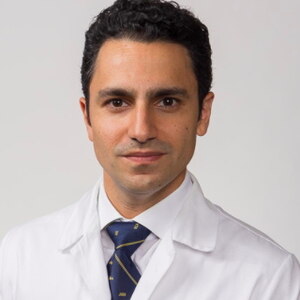
A consultation with Dr. Karlin is $500. Because every plan is customized — built around your anatomy and often combining more than one procedure — the cost of treatment is discussed at your consultation rather than listed here.