
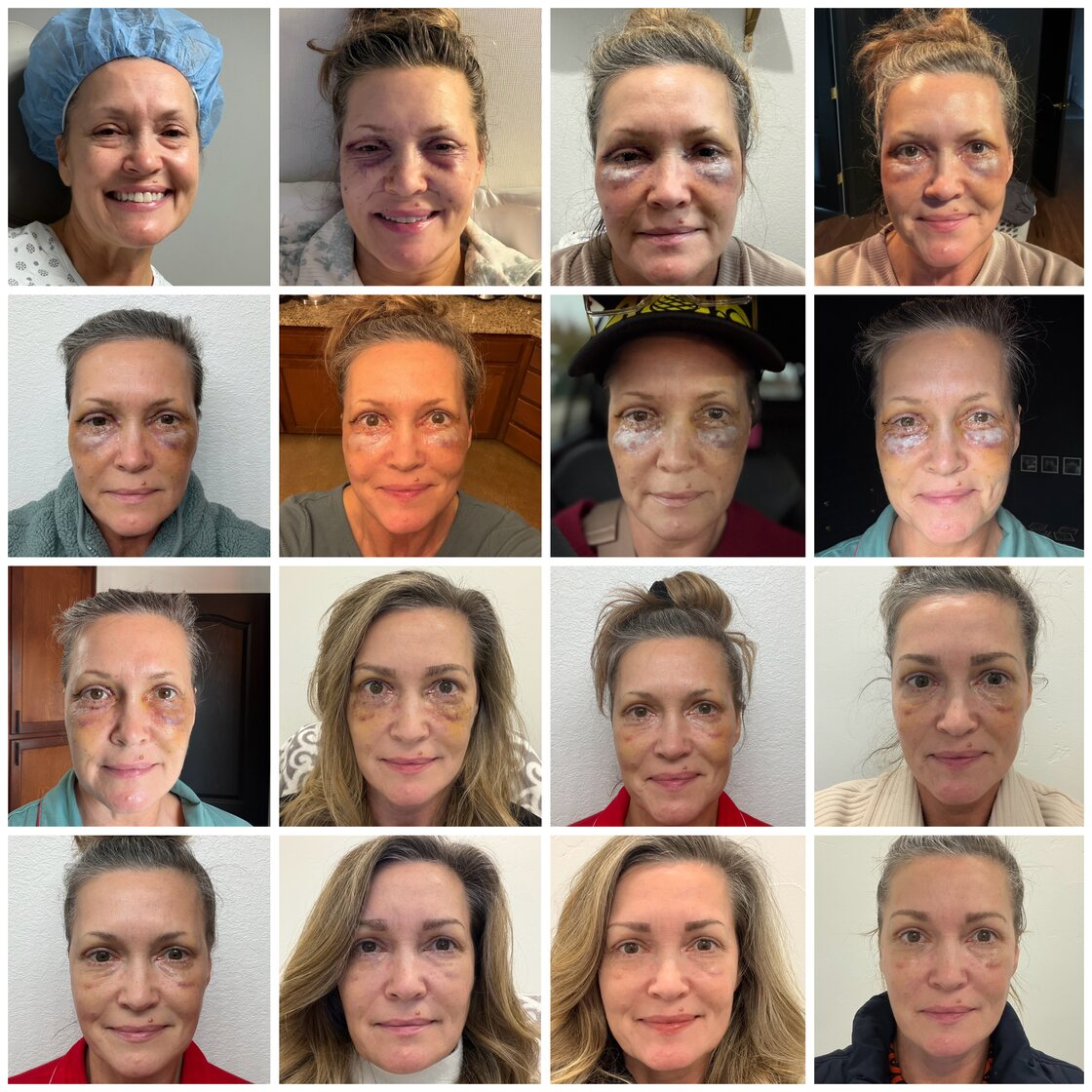
Plan for about two weeks before you feel socially presentable. Bruising and swelling peak around days 3–5, then improve steadily; upper-lid sutures usually come out at day 5–7. Most people return to desk work in 7–10 days. The eye keeps refining quietly for months — incision lines mature and the last swelling resolves over 3–6 months. For the whole journey — preparation through one year — walk the day-by-day patient guide.
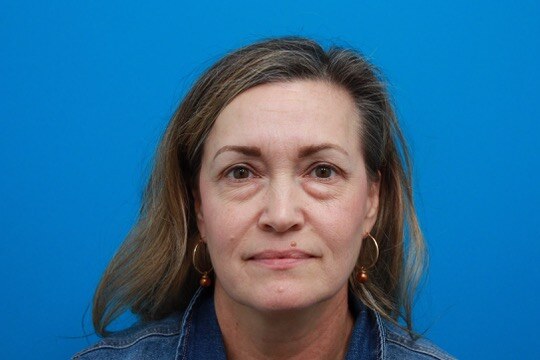
The first 48 hours
Eyelid skin is the thinnest on the body, with a rich blood supply — which is exactly why it bruises and swells readily, and also why it heals so well. Expect the lids to feel tight and look puffy almost immediately. Vision can be a little blurry from ointment and swelling. The job in this window is simple: cool compresses, rest with your head elevated, and no bending, lifting, or straining. Most discomfort is mild and managed with acetaminophen rather than stronger medication.
Days 3–7: the peak, then the turn
Counterintuitively, you often look worse on day 3 than on day 1 — swelling and bruising typically peak between days 3 and 5 before they start to fade. Bruising may drift downward with gravity onto the cheek; that is normal and not a sign of a problem. For upper-eyelid surgery, fine sutures are usually removed around day 5 to 7. By the end of the first week the worst is visibly behind you.
Weeks 1–2: looking presentable
This is the stretch most people care about. By around day 7–10, residual bruising has usually faded enough to pass with glasses on, and many patients return to desk work and quiet social activity. Incisions are healing but may still be slightly pink. Eyes can feel dry or watery as nerves and tear film recalibrate — lubricating drops help. Strenuous exercise still waits.
The calendar people remember is two weeks to face the world, and a few months to forget it ever happened.
Weeks 3–6 and beyond: the quiet refinement
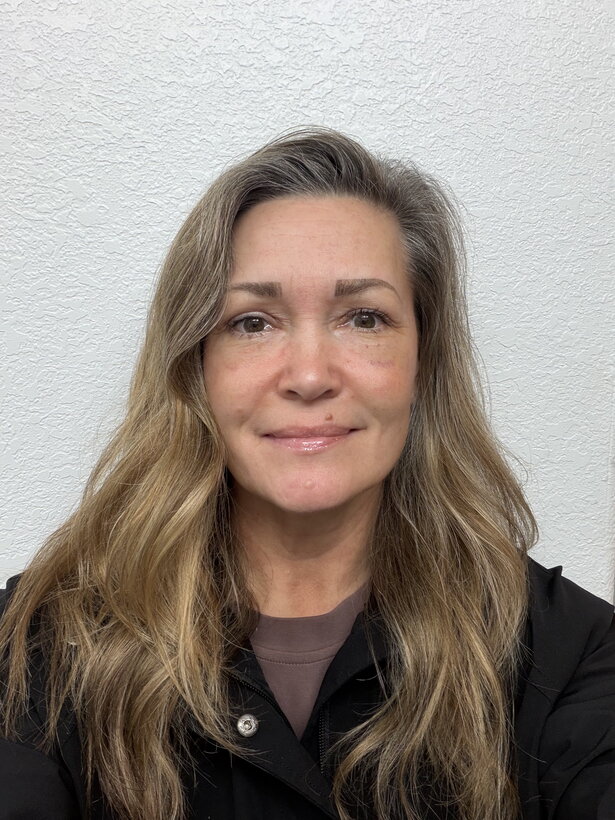
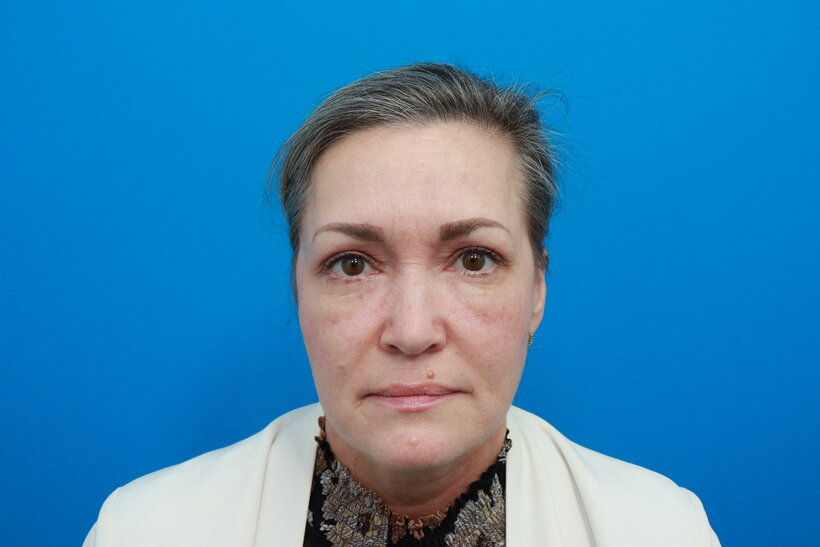
From here, change is subtle. Light exercise generally resumes around two weeks and fuller activity by 3–4 weeks, with your surgeon's clearance. A faint firmness along the incision and small amounts of swelling — often more noticeable in the morning — continue to settle. Incision lines fade from pink to nearly invisible over three to six months, which is when the result is truly final. Sun protection during this period genuinely affects how the scar matures.
How to help your recovery
The things that matter most are unglamorous: keep your head elevated early, use cool compresses for the first two days, protect the area from the sun, avoid blood-thinning medications and supplements only as directed by your surgeon, and don't rush back to strenuous activity. Equally important is realistic expectation — healing is not linear, and a puffy morning at week three is not a complication. If you want the procedure context, see upper and lower blepharoplasty, or ask about your own timeline.