What it is
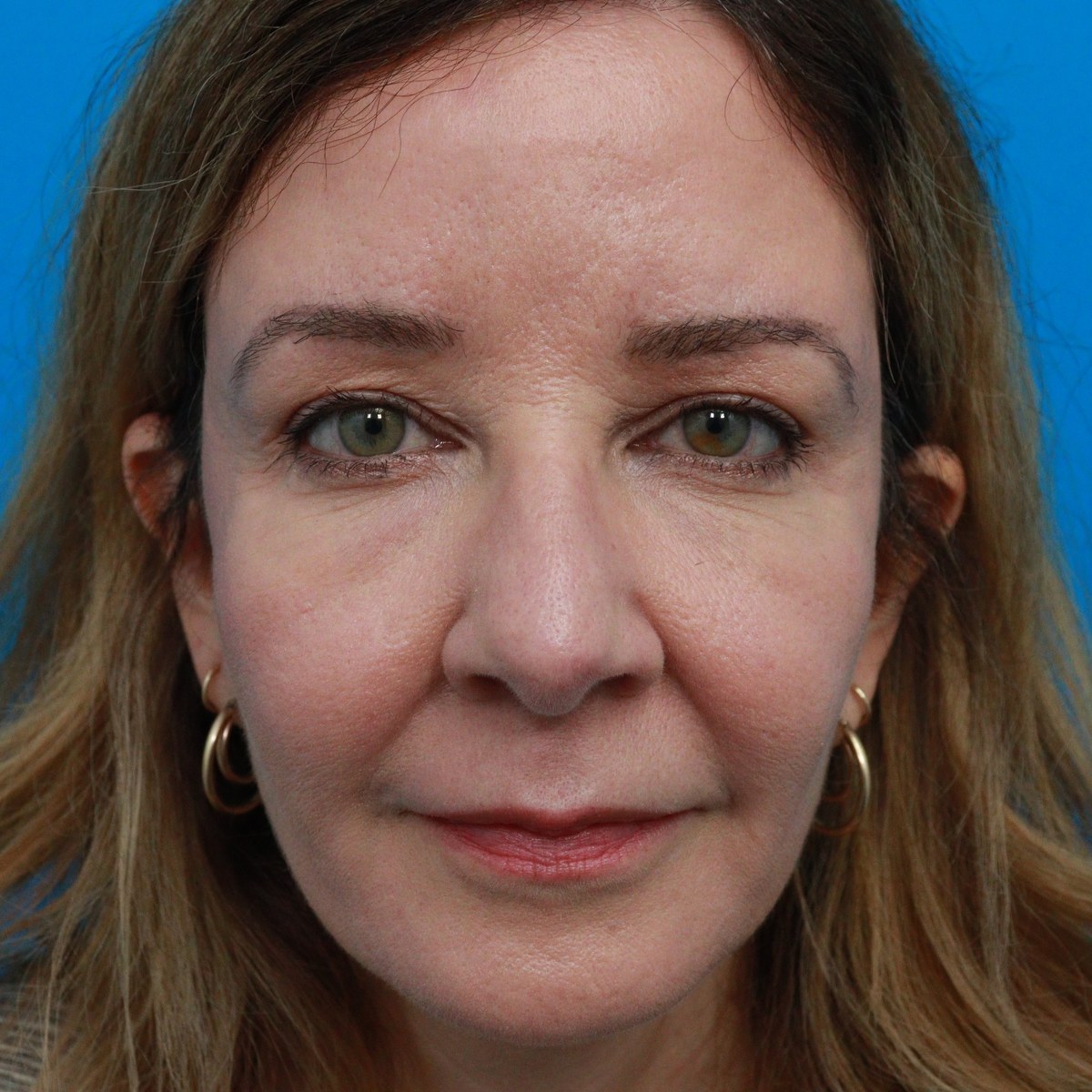
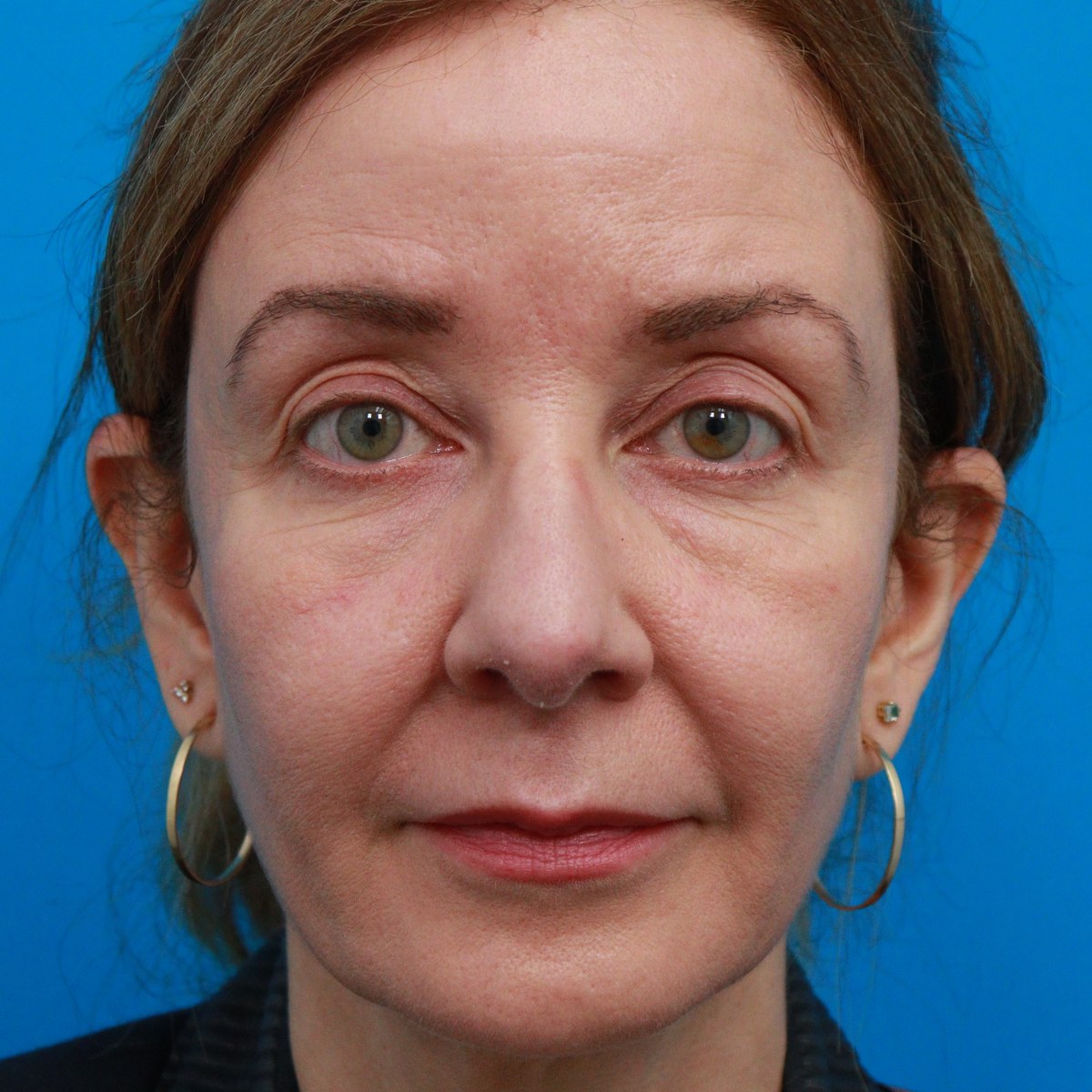
The upper eyelid is mostly skin and a thin sheet of muscle over a cushion of fat. With age the skin loses elasticity and can fold over the lid margin — a condition called dermatochalasis — while the fat pads can bulge. Upper eyelid blepharoplasty addresses the skin and, selectively, the fat. It does not raise the eyebrow or treat a drooping lid muscle; those are brow lifting and ptosis repair, which are sometimes performed at the same time.
Who is a candidate?
You may be a candidate if you have:
- Excess or folding upper-eyelid skin that makes the eyes look heavy or tired.
- Skin resting on the eyelashes, or a sense of having to lift the brow to see.
- Generally good health, no uncontrolled dry eye or eyelid disease, and realistic expectations.
Part of the consultation is distinguishing skin excess from a low brow or a drooping lid, because the right operation depends on which structure is actually responsible.
Often part of a fuller plan
In Dr. Karlin’s aesthetic practice, upper-lid surgery is frequently combined with restoring lost volume — micro fat grafting to the brow and upper-lid hollow — and, when the brow itself has descended, an endoscopic brow lift. Treating skin, volume, and brow position together is what produces a rested eye rather than simply a tighter one.
The technique
The incision is placed within the natural upper-lid crease so the healed line is hidden when the eyes are open. A conservative amount of skin is removed — conservative because over-resection is what produces the operated, hollow look this practice avoids. The underlying muscle is preserved, fat is reduced only where it bulges, and the crease is reformed to sit symmetrically. The procedure usually takes about one hour and is performed under local anesthesia, with or without light sedation.
Recovery timeline
Already scheduled? The patient guide walks every step day by day — what to stop and when, what to have ready, and when to call us.
Cost
A consultation with Dr. Karlin is $500. Because every plan is customized — built around your anatomy and often combining more than one procedure — the cost of surgery is discussed at your consultation rather than listed here.